Monday, January 21, 2019

Writing Through Text: Reading Response Two


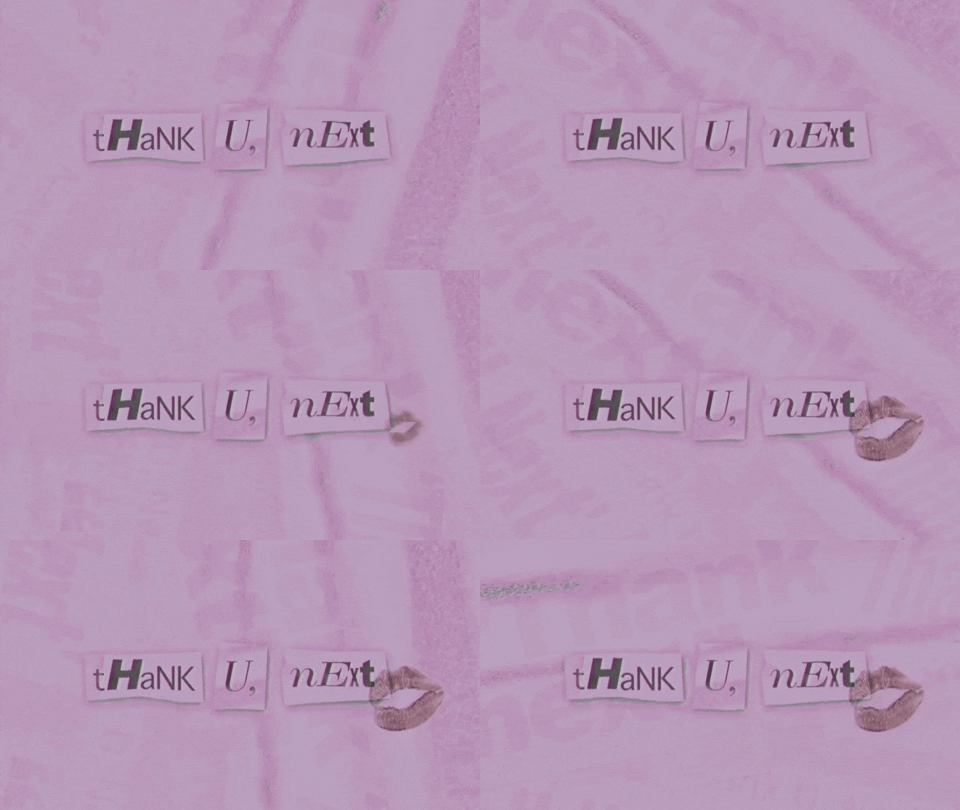
Alongside the discussion of intertextuality comes a more contemporary and accessible way to interact with text. According to theorist Vincent Leitch, who's own analyses of text operated beside Porter saying, "Its system of language, its grammar, its lexicon, drag along numerous bits and pieces  --traces--of history so that the text resembles a cultural Salvation Army Outlet with unaccountable collections of incompatible ideas, beliefs, and sources" (Leitch, 35). Leitch's statement forced me to reassess texts I've recently become privy to, such as Ariana Grande's "Thank U, Next". The video works to compile several romanic comedies that my generation of ABC Family and Nickelodeon lovers are familiar with. From a first glance, the music video operates on the basic levels of intertextuality, by singing on top of famous scenes from the movies Mean Girls, Bring It On, 13 Going On 30, and Legally Blonde. Grande utilizes her audience's familiarity with these famous scenes by first, making them so accurate that they become satirical. This then, allows space for critique  of LGBTQ issues (through the use of queer actors in replacement of the originals), feminism (simply by how ridiculous these films are in retrospect to the song), and millennials (by poking fun of how influenced we are by the pop cultural references of the films). 

I like using "Thank U, Next" as an example of intertextuality because it's a direct link to our culture's current use and understanding of it. So often 'intertextuality' is understood on its basic levels of reference to something else--but usually not taken to understand the writer as more than an individual but, "on the sources and social contexts from which the writer's discourse arises" (Porter, 35). Porter's explanation of discourse community disrupts, in my opinion, the understanding that "intertext constrains writing" (35). Que to a couple days after the music video's release, where Grande performed on Ellen. Here, Ariana Grande performs while copying the famous ending empowering dance scene in The First Wives Club. While amazing, on more than one level, this 'reference' did confuse a lot of young people. The 1996 comedy starring Goldie Hawn and Diane Keaton, to name a few, was a bit of a jump for some people as far as--did you get it? On an analytical note, she did something very important here. Instead of repeating the name cultural references, she's utilizing more than just a couple texts. "Thank U, Next" is about past relationships and moving on with your life. Because she coupled the song between existing texts, that already belong in our culture's repertoire of opinion, reference, love, and critique Grande pulled off something much bigger then the song would have alone. The texts carefully chosen allowed her to communicate the messages of empowerment, humor, and getting on with life in ways that the over repetitive song wouldn't have been able to do solely lyrically. This opens the doors to what intertextuality, and its understanding of it, can accomplish for a seemingly mundane pop song. Being responsible for creating text that is liked between, over, and through several variances of text is complicated enough. "Thank U, Next" is an example of the writer not being "constrained" (35) by text but inspired, and extremely productive, by it.    

O.K., moving on: 

As an aspiring secondary English teacher I'm curious, what have been some of your experiences utilizing multiple texts in the classroom? Of course, Digital Rhetorics has already set the bar pretty high as far as multiplicity of 'types' of texts go. But, really I'm curious, what did some of you experience as far as successful use of texts?   


Monday, January 14, 2019

The 'Body' of Rhetoric: Reading Response One


“All rhetoric is bodily and all bodies are rhetorical” (McDermott, w.p.).  


Challenging a long-standing philosophical tradition of "Cartesianism," (w.p.) that privileges the liberatory power of the mind over the prison of the physical body, feminists like Gloria AnzaldĂșa, Elaine Scarry, and Emily Martin have worked to explore the meaning and value of women’s embodied experience. Both Downs and Fish acknowledge that rhetoric, more than bad people manipulating its functions, works on, through, and for bodies. The turn towards post-modernism has increased this interest in the body, resulting in a number of theorists who have explored the grey space between the view of the body as natural and biologically determined and the view of the body as entirely constructed and inscribed with cultural meaning. Downs states, "First, bodies matter to knowing, meaning-making, and interaction. So, rhetoric must be about bodies as much as minds, and about the material as much as the conceptual" (Downs, 463). 

The discussion of the body is one that I'm actually interested in, for it's use and discussion through feminism and gender theory. (You might have caught on based on the actual blog). My blog design was not one that I did on accident. I love obnoxious 90s patterns and feminist/LGBTQ art. The design was meant to introduce you to my sense of humor and style. However, I am aware that its in-your-faceness could be off-putting or even offensive based on you and your values operating in or outside Queer spaces. My hope is that we're able to communicate side-by-side to discuss and disagree openly. 

 The discussion of the body and its individual interpretations of ANYTHING is one that will be my career. I'm a senior studying to be a secondary English teacher, if this class isn't stressful enough for me, as a student, it's content is stressful to me as a future teacher. The opening framework and rules of rhetoric always take me back to the classroom and the students who will occupy it in a years time! Each year, and each group of students, will offer an entirely different discourse based on the individuals' values, traditions, attitudes, etc. This goes even further to the values and traditions of the larger community of the school district and the larger community. Stanley Fish acknowledges in the first lines of text that “the verse’s judgement on all of his apparent values is delivered in the last two words [of the line].” We know this, that in seconds and in words the judgement of you and what you’re communicating change. However, rarely do we strip these mere moments back to discuss the why. I must be aware of the value of my students individually as well as the values and traditions of the community as a whole, specific instances that have happened in a school district have to do with the school and communities public memory and understanding of an event. We all occupy between several ecologies—as a teacher, I’m realizing that this goes even further—because I’m dealing with human beings. Students who have individual experiences, families with their own beliefs, etc. Each ‘thing’ changes the way I can strategically approach a topic that will be the most productive for these specific people. Age, gender, political beliefs, feelings about me, how tired they are, do they take care of their siblings when their parents are at work all matter. 

Rhetoric is fascinating but I do struggle between being able to identify what’s there, what’s happening based on the actual terminology to make sense of it all. In past rhetoric classes I’ve struggled—I’m able to discuss what’s happening and the why—but admittedly I feel quite introductory in putting these snippets together to create rhetorical analysis within the field of study. I look forward to this class in maybe helping take me out of the classroom, literally and figuratively, to put these same skills and themes of rhetoric into different “digital” platforms to practice the academic ways of discussing it in more informal spaces.    

“By exploring the available means of persuasion in a particular situation, he tries them on, and as they become to suit him, he becomes them” (Fish, 127).